 Remember
The Emergency Grab-and-Go Folder: What to Put In It
Important papers · Remember · · Updated 2026-10-21
The text arrives at 4:10 in the afternoon: the wildfire has jumped the ridge. Your neighborhood is under an evacuation order. You have, at most, an hour.
The kids and the dog go in the car first. Then the medications. Then you stand in the hallway, keys in hand, trying to think. Passports? Insurance papers? The house deed? Where even are those?
Most of us will never face that hour. But floods, fires, storms and medical emergencies happen to ordinary families every year, often with little warning. And in every one of them, the same question comes up: which papers do I need, and where are they?
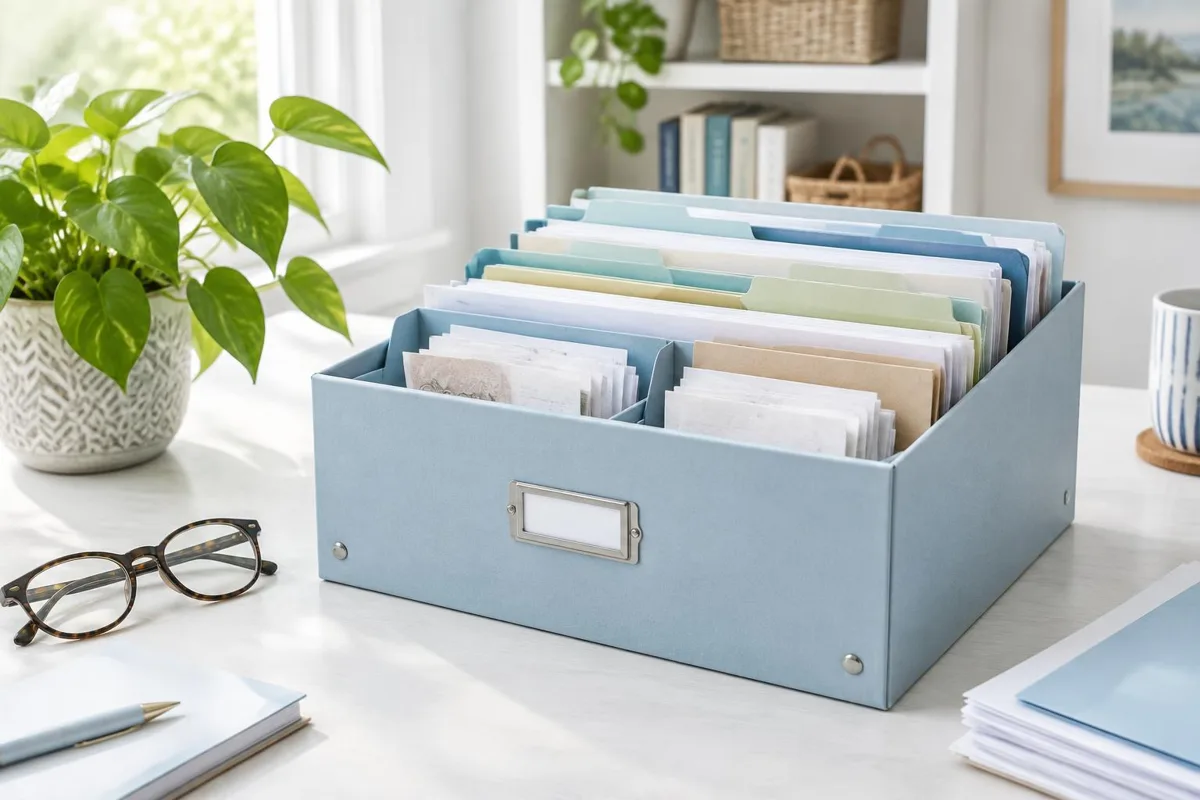
A grab-and-go folder answers it in advance. One folder, one place, ready to leave in thirty seconds.
What to put in it
FEMA and Operation HOPE's Emergency Financial First Aid Kit groups the essentials into four areas. In practice, that means copies of:
Identification
- Driver's licenses and photo IDs (copy both sides)
- Passports (the first two pages) or green cards
- Birth, marriage and adoption certificates
- Social Security cards
- Military discharge papers
- Pet identification and vaccination records
Money and legal
- Insurance policies: home or renters, auto, life, flood
- Bank and investment account information
- Recent tax returns
- Mortgage or lease, and major bills
- Wills, powers of attorney and other estate documents
Medical
- Health insurance cards
- A current list of medications and doses
- Prescriptions
- Doctor and pharmacy contact information
Contacts
- Family and emergency contacts
- Your landlord or mortgage company, insurance agents, lawyer and bank
FEMA also suggests photographing or filming your home and belongings for insurance, and noting the date you added or updated each item in the kit.
What NOT to put in it
Don't write down passwords or PINs and store them in the folder. If someone else picks it up, they shouldn't get access to your accounts too. FEMA suggests using hints instead.
Copies in the folder, originals somewhere safe
The folder holds copies, which is what you usually need in the first days after an emergency. Keep the originals of hard-to-replace papers, like deeds and insurance policies, somewhere secure: a fire- and water-resistant box or safe at home, or a safe deposit box away from home. If you use a bank box, check who can open it if you can't.
Keep a digital copy too. FEMA suggests password-protected copies on a flash drive kept in your fire- and water-resistant box, or a secure off-site storage service. A digital copy you can reach from your phone means that even if the folder is left behind, the information isn't.
With Remember, you can photograph each document as you add it to the folder and say a sentence about where the original lives. In an emergency, ask your phone for the insurance policy number or the passport details. Free on iPhone and Android.
Give a sealed copy to someone you trust, like a relative out of town or your lawyer, with instructions on when to open it.
Keep it current
A folder from five years ago may hold old insurance cards and expired IDs. FEMA suggests reviewing it at a regular moment: tax time, your birthday, New Year's, or when the clocks change. Update it after big life changes too: a move, a new insurer, a new bank account, a marriage or divorce, a birth or a death.
That hallway, revisited
4:10 p.m., the same text. The kids and the dog go in the car. The medications go in the car.
Then you open the hall closet, take the red folder from the shelf, and you're out the door. Twelve minutes.
In the motel that night, the insurance company asks for your policy number. You open the folder. It's right there.
Start your folder this weekend. Snap each page with Remember as you add it, so you have a backup in your pocket.
Frequently asked questions
What documents should I take in an emergency?
Copies of IDs, passports, birth and marriage certificates, Social Security cards, insurance policies, bank and account information, medication lists, health insurance cards and emergency contacts.
Should I keep originals or copies in a grab-and-go folder?
Copies. Keep originals of hard-to-replace documents in a fire- and water-resistant safe or a safe deposit box, and keep a secure digital backup.
Where should I keep my emergency document folder?
Somewhere you can grab it in seconds on the way out, like a hall closet shelf, and make sure everyone in the household knows where it is.
How often should I update it?
At least once a year, plus after major changes like moving, changing insurers, or a birth, marriage, divorce or death in the family.
Your papers, in your pocket. Snap each document as it goes in the folder. Find it on your phone, wherever you are. Free on iPhone and Android. Get it for iPhone · Get it for Android · Or start in your browser
Sources
- Emergency Financial First Aid Kit — FEMA and Operation HOPE
- Financial preparedness — Ready.gov
- Disaster preparedness — NAIC
Related articles
Where to Keep Important Documents at Home: A Simple Checklist · How to Make a Home Inventory for Insurance
New articles, by email
Practical ways to remember the little things. No spam, leave anytime.