 Remember
Where to Keep Important Documents at Home: A Simple Checklist
Important papers · Remember · · Updated 2026-10-21
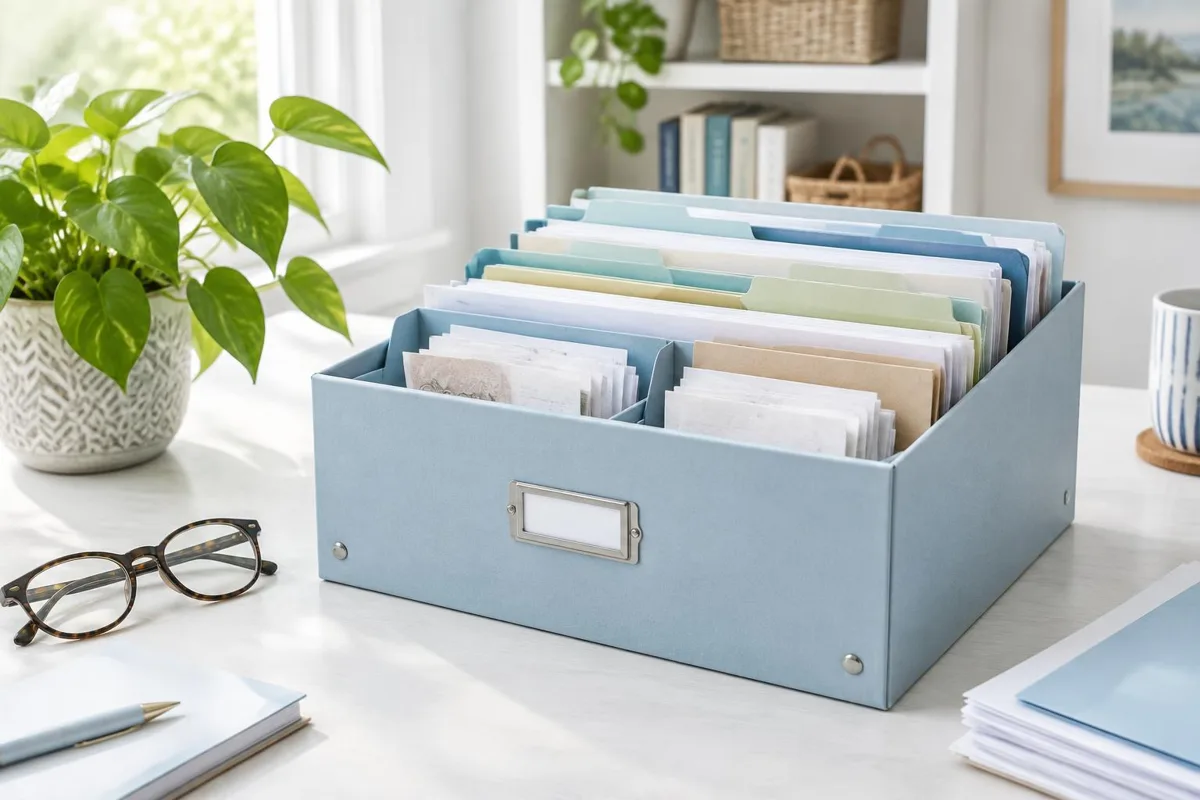
The buyer is standing in your driveway, cash ready, smiling at the car you're finally selling.
"Great. I just need the title."
You smile back. "Of course. One minute."
Twenty minutes later, you've been through the desk, the filing cabinet, the kitchen drawer of mystery papers, and a shoebox labeled "IMPORTANT" that turns out to hold birthday cards from 2014. The buyer is checking his phone. You're quietly wondering whether the title was ever in this house at all.
Important documents have a strange habit: they're forgotten for years, then needed within the hour. The passport, the morning of the trip. The insurance policy, the night the pipe bursts. The birth certificate, the day the school asks for it.
You don't need a complicated filing system to be ready. You need three things: to know which papers matter, a safe place to keep them, and a way to find any one of them in two minutes. Here's how to set up all three in an afternoon.
The checklist: which papers actually matter
Most of the paper in a home can be recycled. The documents below are the ones worth keeping safe, because they're hard to replace or you'll need the originals.
Identity
- Birth certificates
- Passports
- Social Security cards
- Marriage certificate, divorce decree, adoption papers
- Citizenship or naturalization papers
Home and car
- Property deed and mortgage papers, or your lease
- Car titles and registration
- Home and auto insurance policies
Money and taxes
- Recent tax returns and their supporting papers
- Retirement and investment account statements (the latest is usually enough)
- Loan papers and records of loans you've paid off
Health
- Health insurance cards and policy details
- Vaccination records, especially for children
- A short list of medications and doctors' contact details
Family and the future
- Wills, trusts and powers of attorney
- Life insurance policies
- Contact details for your attorney, financial advisor or insurance agent
The everyday extras
- Warranties and receipts for big purchases (appliances, electronics, furniture)
- Manuals for anything you'd struggle to replace or repair
- Spare keys, with a note of what each one opens
How long to keep tax records and financial statements depends on your situation. Check the IRS guidance or ask a tax professional before shredding anything from the money section.
Where to keep them
There's no single perfect spot. Most families do best with three layers: one for things you need often, one for things you rarely touch, and a digital backup of everything.
At home: a fire- and water-resistant box or safe. This is the home for papers you might need quickly or on short notice: passports, birth certificates, Social Security cards, insurance policies, car titles. Choose one rated for both fire and water, keep it somewhere you can reach easily (not buried at the back of the attic), and make sure one other trusted adult knows where it is and how to open it.
Away from home: a safe deposit box. Good for originals you almost never need but would hate to lose: property deeds, savings bonds, family heirlooms. The catch is access. Banks keep business hours, and in some cases a box can be hard for family to open after its owner dies. Ask your attorney where the original of your will should live.
Everywhere: digital copies. Photograph or scan every document on the checklist and store the copies somewhere secure that you can reach from your phone. A copy won't replace an original, but it can be a lifesaver: the passport number when you're filling in a form abroad, the policy number when you call the insurer, the vaccination dates the school is asking for. An app like Remember keeps those photos private to you and finds the right one when you ask.
The grab-and-go folder. One last idea worth borrowing from emergency planners: a single folder, near your home safe, with copies of the papers you'd need if you had to leave the house in a hurry. IDs, insurance policies, a list of medications and emergency contacts. If the day ever comes, you'll be glad you only had to grab one thing.
The part everyone skips: finding them again
Here's where most good intentions fall apart. You set up the safe, file everything neatly, and two years later you can't remember whether the car title went in the safe, the bank box, or the folder labeled "Car stuff." Some papers drift back out for a renewal and never return.
The fix is a simple map: a record of where each important document lives.
It can be a single sheet of paper taped inside the safe's lid. Or it can take ten seconds per document with Remember, free on iPhone and Android: snap a photo of the folder as you put it away and say where it went. "Car title, fireproof box, hall closet, blue folder." Remember works out the place for you — Hall closet → Fireproof box → Blue folder — and when you need it, you just ask: "Where's the car title?" See how photo inventory works →
One tip for the most sensitive papers: you don't need to photograph the numbers themselves. For a Social Security card, a photo of the folder and a note of where it is will do. The goal is to know where the original is, not to carry a copy of every number.
Back in the driveway
Picture that car sale again, with the map in place.
"I just need the title."
You ask Remember where it is, walk to the hall closet, open the box, and pull out the blue folder. Two minutes. The buyer never even looks at his phone.
That's the whole point of all this. Not a perfect filing system, just a calm two minutes instead of a frantic twenty, whenever life asks for a piece of paper.
Frequently asked questions
What is the safest place to keep important documents at home?
A fire- and water-resistant box or safe that you can reach quickly, with digital copies stored securely as a backup. Tell one trusted adult where it is.
Should I keep my passport in a safe deposit box?
Usually not. Passports are often needed on short notice, and a bank box is only open during business hours. A home safe is more practical.
Do I need to keep paper originals if I have scans?
For many documents, yes. Birth certificates, titles, deeds and similar papers usually need to be originals when you use them. Scans are a backup, not a replacement.
How do I organize important papers so I can find them fast?
Keep them in a small number of places, label folders clearly, and keep a simple record of where each one is — on paper inside your safe, or in an app like Remember that you can ask.
Know where every paper is. Snap the folder, say where it went, and ask for it when you need it. Free on iPhone and Android. Get it for iPhone · Get it for Android · Or start in your browser
Related articles
How to Remember Where You Put Things (and Stop Searching the House) · How to Reduce Your Mental Load Without Another To-Do App
New articles, by email
Practical ways to remember the little things. No spam, leave anytime.